The Chimney Vents More than the Used, or Unused, Fireplace
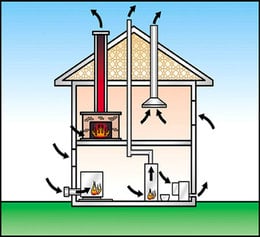
As a homeowner, you’ve come to realize that if you have a fireplace, the smoke needs to go somewhere, and preferably not in your home. Smoke or gases from your gas fireplace or woodburning fireplace goes up the chimney and out of the home.
Have you thought about where or how the exhaust from your gas heating appliances such as a furnace, boiler or water heater go? These heating appliances rely on the chimney to vent, or get rid of, exhaust gases.
Appliance Venting
We all have furnaces and hot water heaters. Depending on the age of your home, you may still have the ‘octopus’ or the old boiler system to heat the home. A family member of mine continues to use the original boiler…about 50 years old…and I think it takes up half the basement. Okay, maybe not that much, but needless to say, it is huge.
Regardless of age of the furnace, boiler or hot water heater, the combination of fuel, air and ignition is what creates combustion and heats the air or water. The combustion creates byproducts. As fireplaces creates byproducts or the black sticky, gooey creosote, furnaces and hot water heaters create carbon monoxide, condensate and other emissions. The difference is simple: you can ‘see’ and sometimes ‘smell’ creosote/smoke, but the corrosive deposits from furnaces or hot water heaters are not necessarily visible in the chimney. This is one of the many reasons to have the chimney swept and inspected annually.
All Chimneys Need to be Ventilated
Regardless if you use your fireplace or not, the chimney flue vent lining needs to be in proper working order. To keep moisture from building inside of the chimney, good draft, or venting, needs to occur inside of the chimney – This is a chimneys primary function. According to the Chimney Safety Institute of America, combustion of one cubic foot of natural gas requires more than 10 cubic feet of air to supply adequate oxygen.
The National Fire Protection Association requires that every chimney have a chimney liner. Superior Chimney recommends a stainless steel chimney liner. A stainless steel chimney liner is safe and durable for wood burning, gas or oil appliances. We also take the time to ensure that the chimney liner is a continuous piece of metal ensuring the safe passage of smoke and gasses while eliminating excess condensation which can appear as a leak. As you know, with any slight crack, or loose joint, smoke and moisture will find its way to the weak spots creating problems over time. Keep in mind the stainless steel chimney liner also protects from deterioration or corrosion build up on the chimney structure itself. With all of the time we’re spending in our homes, let’s keep it as safe and secure as we possibly can. Contact Superior Chimney today at 877-244-6349.
This post first appeared on https://www.superiorchimney.net

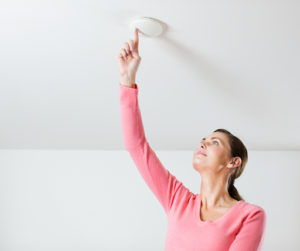 smoke builds up in your fireplace and it will of course alert you in case of any kind of fire. Your carbon monoxide detector will let you know if there is a leak in your home which is essential, given that carbon monoxide is odorless and deadly.
 A chimney without a chimney cap is like a house with no roof. Your chimney is, of course, an exit route for combustion gases. But, without a chimney cap, your chimney is also an open invitation for various unwanted elements that get inside. If there is no chimney cap covering your flue pipe, experts recommend that you contact a qualified chimney sweep without delay. Your
  Downdrafts are blasts of cold air that can enter your home and cause your heating costs to rise. Chimney caps prevent downdrafts.
 There is no comparison to the soothing sounds and aroma of relaxing beside a natural
  Increases Home Value