Solving Chimney Smoke and Draft Problems with a Fireplace Fan
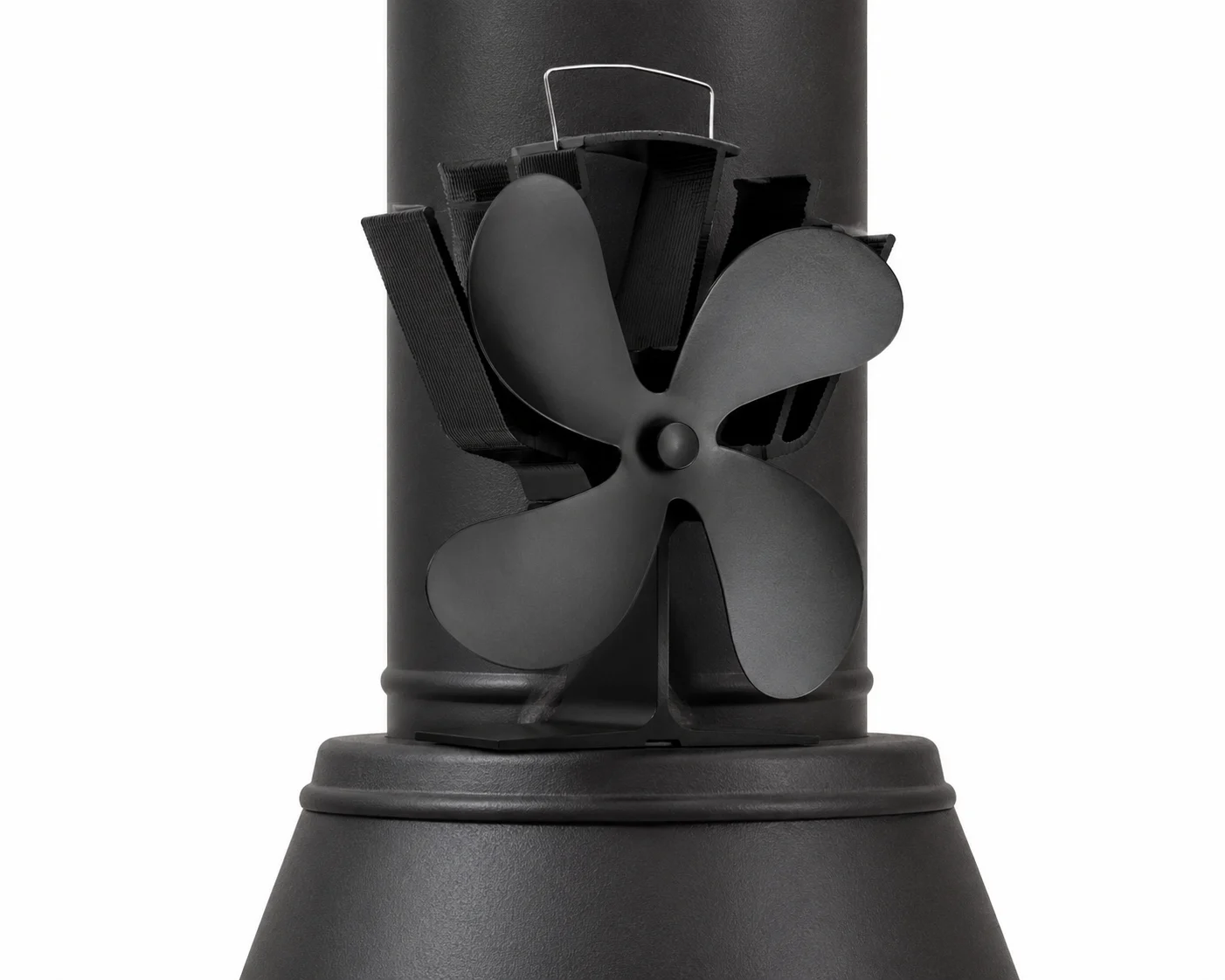
Over the winter and spring season, smoke was a common occurrence at my neighbors house. Since they are new to homeownership, they didn’t realize smoke was to go outside, and nothing was to backtrack inside. When there’s a smoke problem from the fireplace, question it. The answer can be as simple as a fireplace fan.
A fireplace fan is a mechanical exhaust fan, often called an Exhausto fan, Enervex fan, or chimney extractor fan, that mounts on top of a chimney to pull smoke up and out of your home. It corrects the draft process caused by undersized flues, low chimney height, or negative pressure inside the home. Now that you know what it is in a nutshell, let’s take a closer look.
What Is a Fireplace Fan?
A fireplace fan is a powered ventilator installed at the top of a chimney flue. This is different than a chimney cap. A chimney cap protects from animals, weather elements and debris from entering your home. A fireplace fan actively draws air and combustion gases up and out of the house.
These fans go by several names depending on the manufacturer and region. You may see them listed as:
• Exhausto fans
• Enervex fans
• Fireplace chimney fans
• Flue fans
• Chimney extractor fans
Regardless of the name, the function is the same: create enough draft to overcome whatever it is preventing the chimney from extracting the smoke naturally.
Why Do Chimneys Smoke?
Before choosing a fan, it helps to understand what actually causes smoke to enter a living room from the chimney. According to chimney physics research published by the Chimney Safety Institute of America (CSIA), venting problems generally fall into a small number of categories: spillage, back drafting, flow reversal, wind induced downdraft, and inadequate flow.
Spillage happens when some combustion gases escape into the room while the rest continue moving up the chimney. It is often the first sign of a draft problem.
Back drafting is a more serious problem. The CSIA describes it as a condition where chimney flow is fully reversed. Now all of the gases go into your home and nothing goes outside.
Negative pressure inside the home is one of the most common causes. Modern homes are sealed tightly for energy efficiency. Range hoods, bathroom fans, and clothes dryers all exhaust air outward. The air needs to be replaced from somewhere. In a tight house, the best path is often from the chimney flue.
Other contributors include an undersized or oversized flue, a chimney that goes beyond the roofline, or a fireplace design that is just hard too vent such as a corner unit.
How a Fireplace Fan Solves Problems
A fireplace fan replaces the natural draft with a mechanical draft. The mechanical fan can 0extract air and smoke from the flue and get rid of it at the top of the chimney.
This matters because the fan fixes the pressure problem (in the chimney). A properly sized fireplace fan will:
• Establish negative pressure inside the flue so smoke has nowhere to go but up and out
• Operate regardless of wind direction or outdoor temperature
• Allow speed adjustment from inside the room to match fire size and airflow needs
Types of Fireplace Fans
Most residential fireplace fans fall into one of two categories: rooftop mounted extractor fans (the Exhausto and Enervex style units) and inline or booster fans installed lower in the flue system.
The table below compares the two approaches.
This post first appeared on https://www.superiorchimney.net
