Chimney Tuckpointing Restores Masonry Mortar Joints for a Sound Chimney
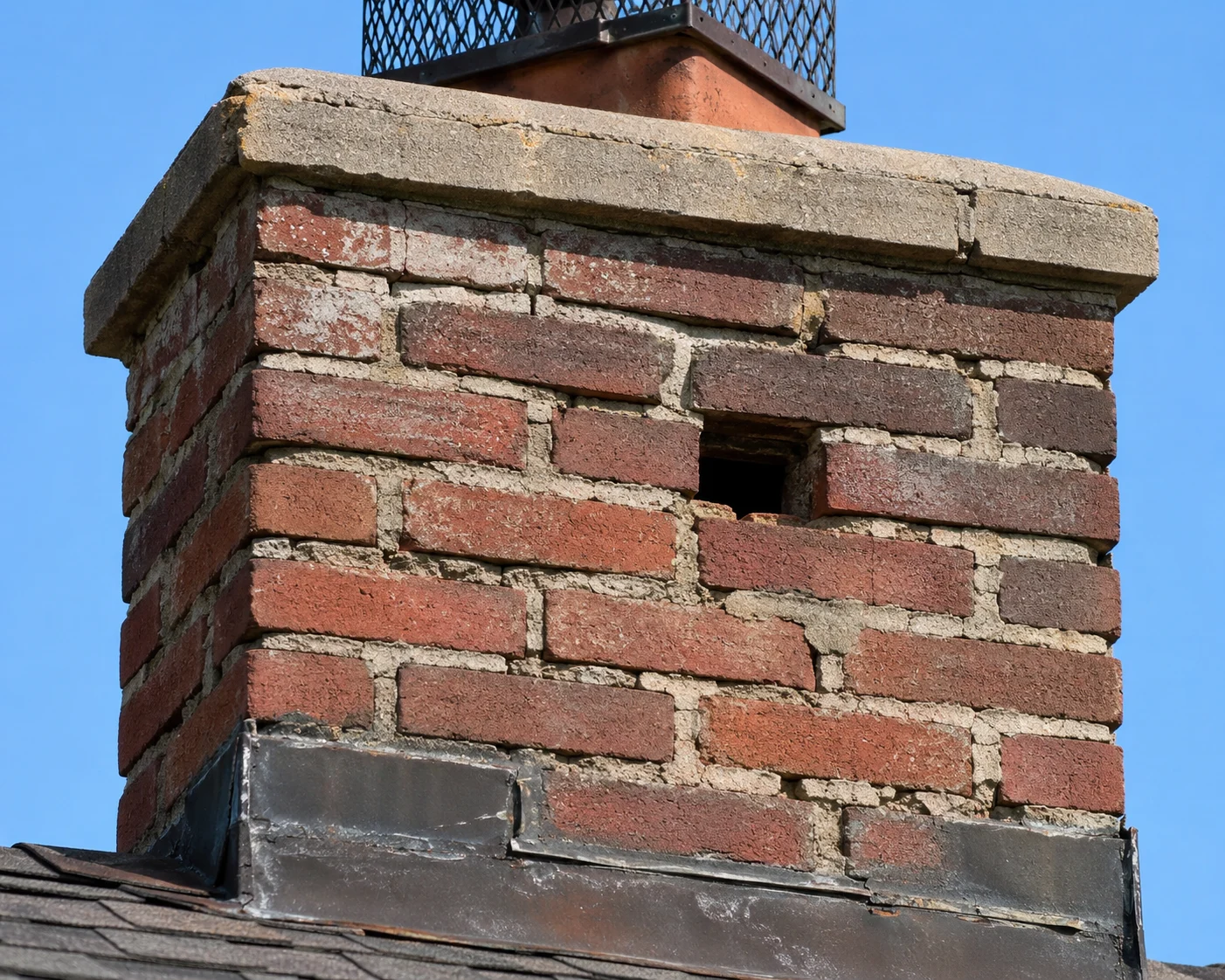
Difference Between Chimney Tuckpointing and a Full Chimney Rebuild
Chimney tuckpointing addresses targeted mortar joint failure while the bricks around the mortar remains structurally sound. A mason removes the cracked or missing mortar, replaces it with new material, and tools the surface for a weather-tight and beautiful finish. This process restores both function and appearance without touching the bricks.
A full chimney rebuild becomes necessary when spalling, leaning, or missing bricks / stone has spread across enough of the chimney that mortar repair alone isn’t enough. At this stage, sections of brick need to be fully replaced with new mortar.
Scheduling a professional from Superior Chimney at the first signs of missing mortar, cracked mortar, and/or missing bricks is critical to repair the chimney instead of needing to build part or a brand new chimney all together.
Chimney Saver is Used for Preventative Maintenance
Superior Chimney applies Chimney Saver, a waterproofing agent developed specifically for masonry chimneys, to help preserve chimney integrity and reduce the frequency of future brick chimney repairs.
Chimney Saver is vapor permeable, allowing a masonry chimney to release moisture that originates from inside the structure while blocking new water from entering through the brick surface. Pairing chimney tuckpointing with a waterproofing application such as Chimney Saver, gives the chimney a way to protect itself.
Different Mortars have a Purpose
Mortar strength plays a role in how well a chimney tuckpointing repair performs over time. Masonry professionals can select from a range of mortar types, each has a different structural role.
Softer mortar types are best for older or historic brick. Matching mortar strength to the surrounding brick prevents new stresses from forming. Stronger mortar serves structural applications where the masonry itself already carries heavier loads.
Selecting mortar that is weaker than the original brick keeps stress concentrated in the mortar joint rather than the brick face during freeze-thaw cycles, preserving the brick as the longer-lasting material. This explains why mortar joints are designed to wear down first. A joint engineered to absorb seasonal movement protects the brick and stone around it.
The Best Time to Schedule Chimney Tuckpointing
Mortar curing depends heavily on temperature. Mild, dry weather allows fresh mortar to cure at a steady pace, making the strongest possible bond within the joint.
Spring, summer and fall generally offer the most favorable conditions for chimney tuckpointing. That leaves winter… Winter cold risks freezing before curing completes. That’s why Superior Chimney stresses chimney repairs during these nice weather months.
Frequently Asked Questions
What is chimney tuckpointing? Chimney tuckpointing removes deteriorated mortar from between bricks and replaces it with fresh, color-matched mortar, restoring water resistance and structural integrity to the joint.
How is chimney tuckpointing different from repointing? The terms are frequently used interchangeably across the masonry trade, and both describe removing defective mortar and replacing it with new material best for the surrounding brick.
What causes chimney mortar joints to fail? Freeze-thaw cycling, penetrating moisture, and age-related wear each weaken mortar over time, eventually allowing water, drafts, and insects to pass through the joint into the home.
Does chimney tuckpointing prevent future brick damage? Chimney tuckpointing addresses failing mortar before moisture reaches the brick itself, reducing the likelihood of spalling, cracking, and the structural loss that follows once brick units are compromised.
When does a chimney need a full rebuild instead of tuckpointing? A full rebuild becomes necessary once spalling, leaning, or missing bricks and materials spreads across the structure. This is when mortar repair alone falls short of restoring the chimney’s structural integrity.
Does waterproofing replace the need for chimney tuckpointing? Waterproofing products such as Chimney Saver work alongside chimney tuckpointing rather than in place of it.
Is there a best time of year for chimney tuckpointing? Spring, summer and fall generally provide the mild, dry conditions mortar needs to cure properly.
How long does a chimney tuckpointing repair last? A properly completed chimney tuckpointing repair typically lasts for many years, since matching mortar strength to the surrounding brick and applying a waterproofing layer both extend the working life of the joint.
Experienced Masonry Crews
Superior Chimney’s masonry crews approach each chimney tuckpointing project with attention to color match, joint depth, and mortar selection, restoring both the function and the original appearance of the chimney.
Taking care of mortar deterioration through chimney tuckpointing at the earliest signs of wear, protects a home from water intrusion, preserves the structural integrity of the masonry, and extends the working life of the chimney.
Contact Superior Chimney today to schedule your chimney inspection at 877-244-6349.
This post first appeared on https://www.superiorchimney.net
