Why Does Chimney Mortar Need to be Replaced?
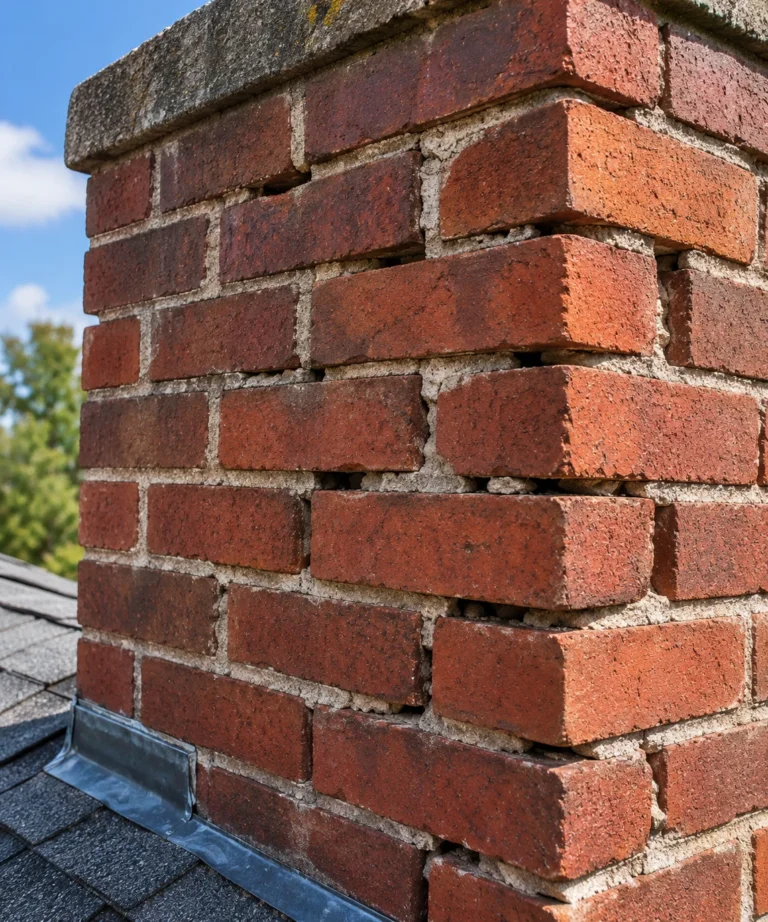
Chimney mortar needs to be replaced in the Chicagoland area because repeated freeze and thaw cycles, weather elements and age break down the joints between bricks long before the brick itself wears out. Chimney tuckpointing removes the deteriorated and missing mortar and is replaced with new mortar, sealing out water and protecting your chimney.
As you may have heard, the El Nino weather patterns states that the Midwest will have a milder winter. Although you might be breathing a sigh of relief, that predication does come with a cold-free, snow-free winter. What lesser snow means? With Chicago, we never know. This means you still need to prepare for the winter season and you can rely on Superior Chimney protecting your chimneys home for the long term.
What is Chimney Tuckpointing?
Chimney tuckpointing is the trade term for grinding out failing mortar between stone or brick and replacing it with fresh mortar that closely matches the existing mortar. Tooling is used in each joint to the shape you see today. The reason chimney tuckpointing is so important is so the surface keeps the water out and directs it away from the chimney and inside your home.
Why Does Chimney Mortar Need to be Replaced?
The brick on most Chicagoland homes can last well over a hundred years. The mortar holding those bricks together wears out much sooner and usually needs attention decades before the brick does.
That difference is by design. Mortar is meant to be the softer, sacrificial part of the wall, wearing down so the brick can stay intact. Replacing mortar is far simpler and less costly than replacing brick.
Once the joints start breaking down, water finds its way behind the brick. That is when small problems start turning into expensive ones.
What Causes Chimney Mortar to Deteriorate and Crumble?
Chimney mortar crumbles due to it being porous. When it rains or snows, water is absorbed into the joints. Then when the yearly freeze thaw cycle returns, it pries the chimney mortar apart a little more each time. Long winters with frequent swings above and below freezing repeat that damage over and over each season.
Lake Michigan Wind and Driving Rain
Wind coming off Lake Michigan pushes rain sideways into the face of the brick. Chimney walls soak up even more water, then when temperatures drop, it gives the freeze and thaw cycle more to work with.
Why Chimneys Fail First
A chimney stands exposed on every side above the roof. It takes on rain, snow and wind from all directions. But don’t forget the debris and our neighborhood critters which find shelter inside the chimney. The combination is why chimney mortar tends to fail ahead of the rest of the house.
What Kind of Mortar Is Used for Tuckpointing?
The right mortar for tuckpointing matches the strength, color, and texture of the original. Soft historic brick needs a softer lime blend, while modern hard brick can take a stronger cement blend.
Matching Mortar to Historic Chicagoland Brick
Many vintage bungalows and two flats from Oak Park to Evanston were built with common brick, a softer brick fired from local clay. These walls need a lime rich mortar so the joint flexes and protects the brick face.
The National Park Service makes the same point in Preservation Brief 2, its guide to repointing mortar joints in historic masonry. New mortar should be softer than the surrounding brick so the joint absorbs the stress.
Mortar that is too hard traps moisture and forces the brick to take the strain. Over time that leads to cracked and flaking brick faces.
Color Matching for a Uniform Look
Superior Chimney works to match the chimney mortar to the current color for a uniform look. But it goes one step beyond just the color. We also work to ensure that the joint profile and tooling style also match to the original as closely as possible.
Done correctly by an experienced masonry, it will appear as one continuous chimney wall.
This post first appeared on https://www.superiorchimney.net